Site search
General

GS Yuasa powers up new renewable-energy storage system at Nagasaki solar park

Thursday 19 Feb 2026

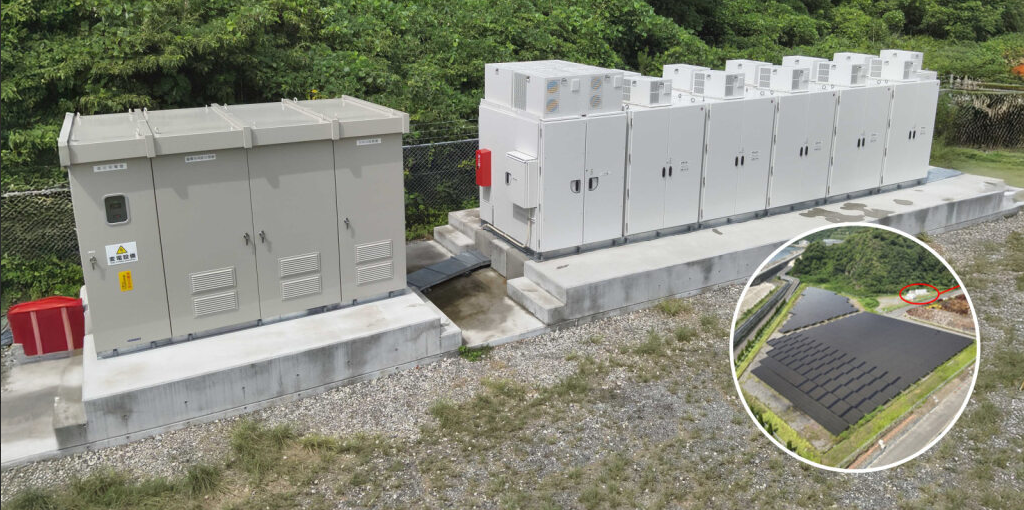
GS Yuasa has begun operation of a new renewable-energy-integrated storage battery system at the Ene-Seed Nagasaki No. 2 Solar Power Plant in Nagasaki, Japan. The project, developed together with Saibu Gas Group company Ene-Seed Corporation and Toshiba Energy Systems & Solutions Corporation, marks the Saibu Gas Group’s first use of storage batteries directly integrated with renewable generation.


At the site, solar power from the Nagasaki No. 2 plant is combined with GS Yuasa’s lithium-ion energy storage system to help smooth fluctuations in generation and support stable plant operation and revenue. Toshiba acts as the aggregator, forecasting power generation and market prices, creating charge and discharge plans and controlling plant output, while GS Yuasa is responsible for supplying the domestically produced batteries and power conditioning systems, as well as ongoing monitoring, predictive diagnostics and maintenance.


The Nagasaki installation forms part of a wider roll-out, with similar systems planned for four additional solar power plants in Kitakyushu City, Japan. Together, these sites demonstrate how intelligently controlled storage can help owners of renewable assets manage variability, optimise participation in electricity markets and support the transition to a more flexible, low-carbon power system.


This project in Japan sits alongside some of the world’s largest and most advanced energy-storage schemes delivered by GS Yuasa. In northern Hokkaido, Japan’s largest battery energy storage facility – a 240 MW / 720 MWh installation using GS Yuasa industrial lithium-ion batteries – supports a major wind-power transmission project by smoothing output and stabilising the regional grid. At the Honda Kumamoto Factory, a 20 MWh GS Yuasa energy storage system works in tandem with a 7.1 MW solar plant to store surplus generation and release it when needed, maximising on-site use of renewable energy.


Alongside these large-scale schemes, GS Yuasa technology is also used in smaller, localised projects that bring renewables closer to communities and businesses. In South Wales, for example, GS Yuasa batteries form part of a multi-technology energy centre combining wind, solar and storage to supply power directly to customers at the Rassau industrial estate, including GS Yuasa’s own manufacturing facility. GS Yuasa Battery Europe has also helped develop one of the world’s first container-based dual-chemistry energy-storage systems, combining lithium-ion and lead-acid batteries to manage locally generated renewable power.


From major grid-connected installations in Japan to industrial and community-scale projects in Europe, the same core technologies, system-integration expertise and lifecycle support underpin GS Yuasa’s growing energy-storage portfolio. The Nagasaki solar park system is another example of how the company’s lithium-ion and power-conversion know-how is being deployed to help unlock more renewable generation and improve system flexibility.


Mike Taylor, Product Manager at GS Yuasa Battery Europe Ltd, commented:
“Seeing our energy-storage technology operating at the Ene-Seed Nagasaki No. 2 Solar Power Plant highlights the depth of capability within GS Yuasa. Projects like this demonstrate how advanced lithium-ion storage can support renewable generation, stabilise supply and deliver real operational value. The insights we gain from these systems in Japan are reflected in the solutions we bring to Europe, from large installations to much smaller, site-specific applications. Our focus is always on reliability, safety and long-term performance – qualities that define every GS Yuasa product.”