29 July 2025
The UK is now subject to 25 percent tariffs on automotive parts exported to the US, the EU is 15%. Automotive parts subject to 10 percent tariffs must be products of the United Kingdom and are for use in automobiles that are products of the United Kingdom.
Car exports from the EU to the U.S. face the baseline tariff of 15 percent in the deal struck on July 27.
Britain has negotiated a lower tariff of 10 percent for its car sector but it also has a 100,000-vehicle quota which leaves little room for export growth.
20 June 2025:
Trump issues executive order as per below
Sec. 2. Automobiles and Automobile Parts. (a) I hereby establish an annual tariff-rate quota of 100,000 automobiles as classified in heading 8703 of the Harmonized Tariff Schedule of the United States (HTSUS) and as further specified in note 33(b) to subchapter III of chapter 99 of the HTSUS for automobiles that are products of the United Kingdom.
Imports of automobiles within the tariff-rate quota that would otherwise be subject to a 25 percent tariff under Proclamation 10908 of March 26, 2025 (Adjusting Imports of Automobiles and Automobile Parts Into the United States), shall instead be subject to a 7.5 percent tariff, in addition to the most-favored-nation rate for automobiles of 2.5 percent, for a combined tariff of 10 percent. Imports of automobiles in excess of the tariff-rate quota shall remain subject to the full duties imposed by Proclamation 10908. The tariff-rate quota shall be adjusted for calendar year 2025 to reflect the General Terms’ operative date of May 8, 2025. The quota shall be effective 7 days after the publication of this order in the Federal Register.
(b) Automotive parts specified in note 33(g) to subchapter III of chapter 99 of the HTSUS that would otherwise be subject to a 25 percent tariff under Proclamation 10908 shall instead be subject to a total tariff of 10 percent (including any most-favored-nation tariffs), provided that they are products of the United Kingdom and are for use in automobiles that are products of the United Kingdom. This change shall be effective as of the date of the publication of the Federal Register notice described in subsection (c) of this section.
(c) Within 7 days of the date of publication of this order in the Federal Register, the Secretary of Commerce (Secretary), in consultation with the United States International Trade Commission (ITC) and U.S. Customs and Border Protection (CBP), shall publish a notice in the Federal Register modifying the HTSUS consistent with this section, if necessary.
(d) The Secretary may issue rules, regulations, guidance, and procedures to carry out the provisions of this section.
9 May 2025: US President Trump had placed import taxes of 25% on cars and car parts coming into the US on top of the existing 2.5%. This has been cut to 10% for a maximum of 100,000 UK cars, which matches the number of cars the UK exported last year. But any cars exported above that quota will be subject to a 27.5% import tax
UK Cars exported to the U.S. are also higher value than those sent to other markets, accounting for 27 percent of £9 billion worth of car exports in 2024.
The U.S. is JLR’s largest market by far, accounting for 128,988 sales in the financial year ending March 30, representing 32 percent of its total sales for the period.
JLR had halted U.S. exports after the 25 percent tariff was introduced but said on May 4 that it had restarted shipments.
However, a portion of JLR’s U.S. sales come from the Land Rover Defender and Discovery large SUVs that are built at JLR’s plant in Slovakia in the European Union. Exports to the U.S. of these models are still subject to a 27.5 percent import duty. The EU is seeking a trade deal with the U.S. to lower tariffs. British automakers have yet to see the detail of the tariffs, including how the quota system will work.
2 May 2025: The 25% tariff on imported cars will continue, and a new 25% tariff on auto parts will go into effect this weekend, as previously announced. But there’s some new fine print.
The new actions Trump signed allow reimbursements for domestic car producers importing car parts, which will be subject to 25% tariffs starting May 3. The maximum reimbursement will be 3.75% of the value of domestically produced cars. The cap will decrease to 2.5% for the second year and be phased out entirely thereafter.
At a rally in Michigan to mark the first 100 days of his second term, Trump said the reimbursements would help give US car companies “a little bit of a break” while automakers worked to bring more manufacturing capabilities back to the US.
“They took in parts from all over the world,” Trump said of the auto manufacturers. “I don’t want that. I want them to make their parts here.”
The changes would also shield auto manufacturers from facing multiple auto-related tariffs. Instead, they will only be subject to the highest tariff associated on whatever they’re importing. That means, for instance, they could end up paying a 25% tariff on a car part and not additional 25% tariffs on the steel and aluminum used in them.
Please see below the list of auto parts subject to an additional 25% tariff on imports form all country, effective May 3, 2025.
List of Auto Parts: Federal Register Notice, Annex I, page 11-12
The list covers a wide range of parts for passenger vehicles (sedans, sport utility vehicles, crossover utility vehicles, minivans, and cargo vans) and light trucks. There are some exceptions for U.S.-content eligible under USMCA.
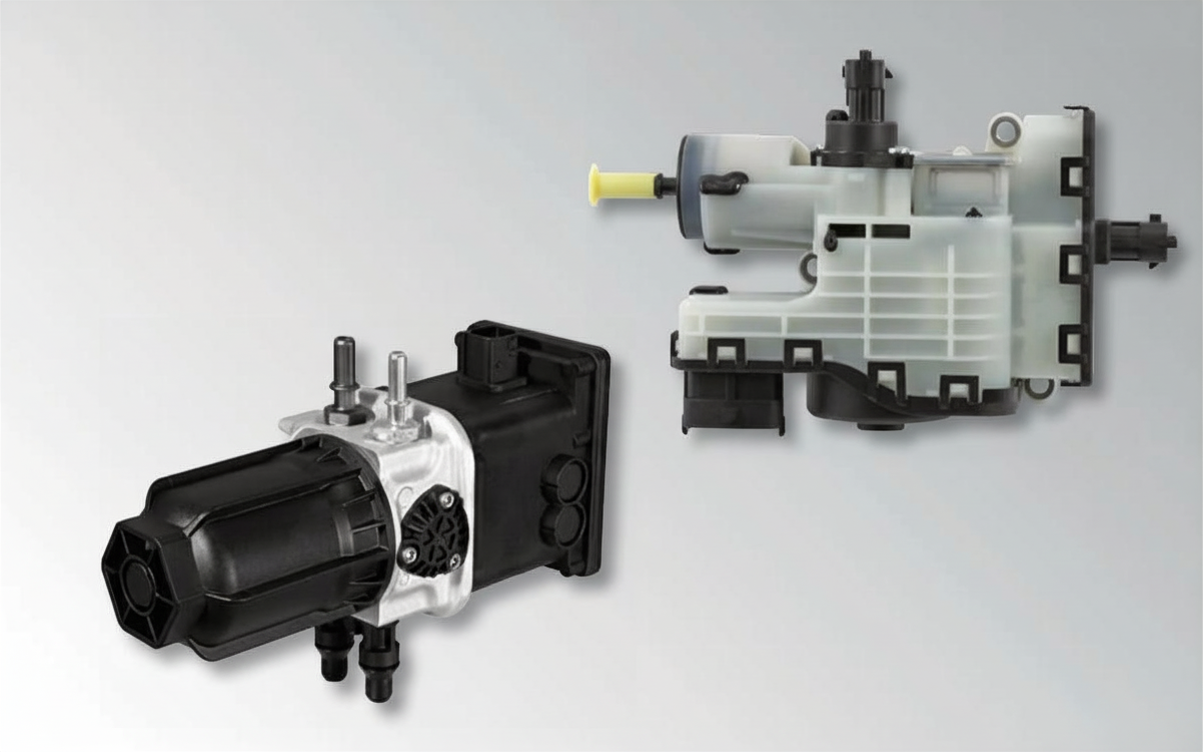
Here are some examples of products that would be impacted. Note that this is not an exhaustive list.
Chassis and Drivetrain Parts
• Brake hoses
• Various Bearings
• Leaf Springs
Automotive Tires and Tubes
• Tyres
• Inner tubes
Bodies and Parts
• Safety glass
• Rear-View Mirrors
• Locks
• Hinges
• Bodies
Engines and Parts
• Compression Ignition Engine
• Fuel Injection Pumps
• Oil or Fuel Filters
• Camshafts and Crankshafts
Electrical and Electric Components
• Compressors
• Turbochargers
• Fans
• Air Conditioners
• Spark Plugs
• Ignition Coils
• Starter Motors
• Generators
• Electric Motors





 Back to all