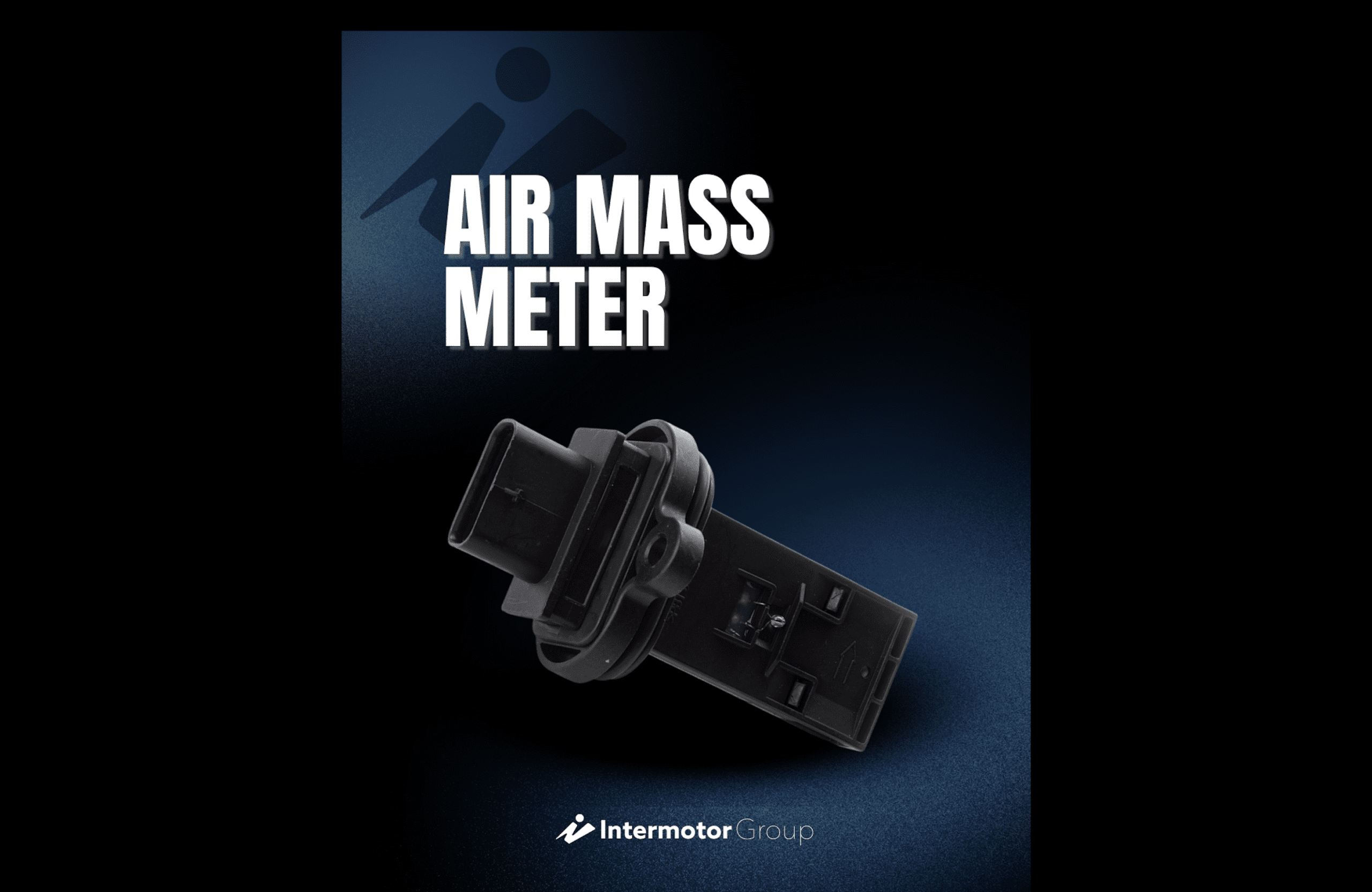
Intermotor Group has shared its expert advice and best practice tips for identifying and confirming air mass meter faults quickly and accurately, as part of its commitment to supporting workshops and technicians.
As a manufacturer of air mass meters at its Centre of Excellence in Nottingham, Intermotor Group is uniquely positioned to understand the challenges technicians face when diagnosing sensor-related faults. Through extensive research, development and engineering expertise, the company has developed a strong understanding of common failure points and best-practice diagnostic procedures designed to support faster, more accurate fault identification.
Nick Tideswell, Engineering & Quality Manager at Intermotor Group, discusses some of the most common signs of a failing air mass meter, including lack of power during acceleration, poor idling and increased emissions.
He explains: “Air leaks on the intake and exhaust system are among the most common issues technicians mistake for an air mass meter fault. That’s why it’s so important to carry out a thorough diagnosis before replacing the sensor.”
Tideswell added: “One of the biggest challenges is that air mass meter issues do not always trigger a fault code, meaning the problem can be overlooked during initial checks.
“Air mass meter faults are difficult to diagnose and the lack of fault codes often gets them overlooked as being faulty.”
To help workshops speed up the process, Intermotor has shared its top three key diagnostic steps. These include checking live data using a scan tool – airflow readings, typically shown in g/s, should be realistic for the engine load and conditions at the time of testing.
Intermotor’s advice also suggest that technicians should disconnect the air mass meter completely, as many vehicles will revert to a default limp mode strategy; if the vehicle runs better with the sensor unplugged, this often indicates a faulty unit.
And the final piece of advice is to swap with a known good unit, as air mass meters are usually quick to replace, testing with a working sensor can help confirm the diagnosis quickly.
Tideswell finished: “Sensor accuracy plays a critical role in modern engine management systems, affecting not only drivability but also fuel efficiency and emissions performance.”
As vehicle electronics become increasingly sophisticated, accurate diagnosis remains essential to avoid unnecessary parts replacement, costly repairs and poor customer service.
For more information about Intermotor Group, visit https://www.intermotor.com/.





 Back to all