MEYLE is highlighting the importance of spring vehicle checks after the winter period. Road salt, moisture, low temperatures and deteriorating road surfaces all contribute to increased wear across key critical components such as braking – making the composition of materials, accuracy of fit and response times from the very first brake application even more important.
As a safety-critical component, a well-maintained and functional braking system is essential. From the emergence of winter, vehicles are experiencing the effects of harsh seasonal conditions.
The scale of road damage in the UK is significant. Recent research from the Asphalt Industry Alliance (AIA) reported the cost of fixing the potholes on local roads in England Wales is anticipated to cost a staggering £18.6 billion*. And it is estimated that there are more than one million potholes across the road network, with defects now a leading cause of vehicle damage and workshop visits. In early 2025 alone, the RAC attended more than 9,000 pothole-related breakdowns in a single quarter**, highlighting the growing impact of poor road conditions on vehicle reliability.
For workshops, this makes spring a critical opportunity to assess brake condition, identify early-stage faults and carry out preventative maintenance.
Hitting a pothole can cause significant – and sometimes hidden – damage by impact loads that travel through the wheel hub and into the braking system. This can lead to disc thickness variation, lateral runout and uneven pad wear, often presenting as vibration or pedal pulsation. Repeated impacts may also contribute to disc distortion, while exposure to road salt and moisture accelerates corrosion. All of this over time can lead to reduced braking efficiency, increased stopping distance and premature wear.
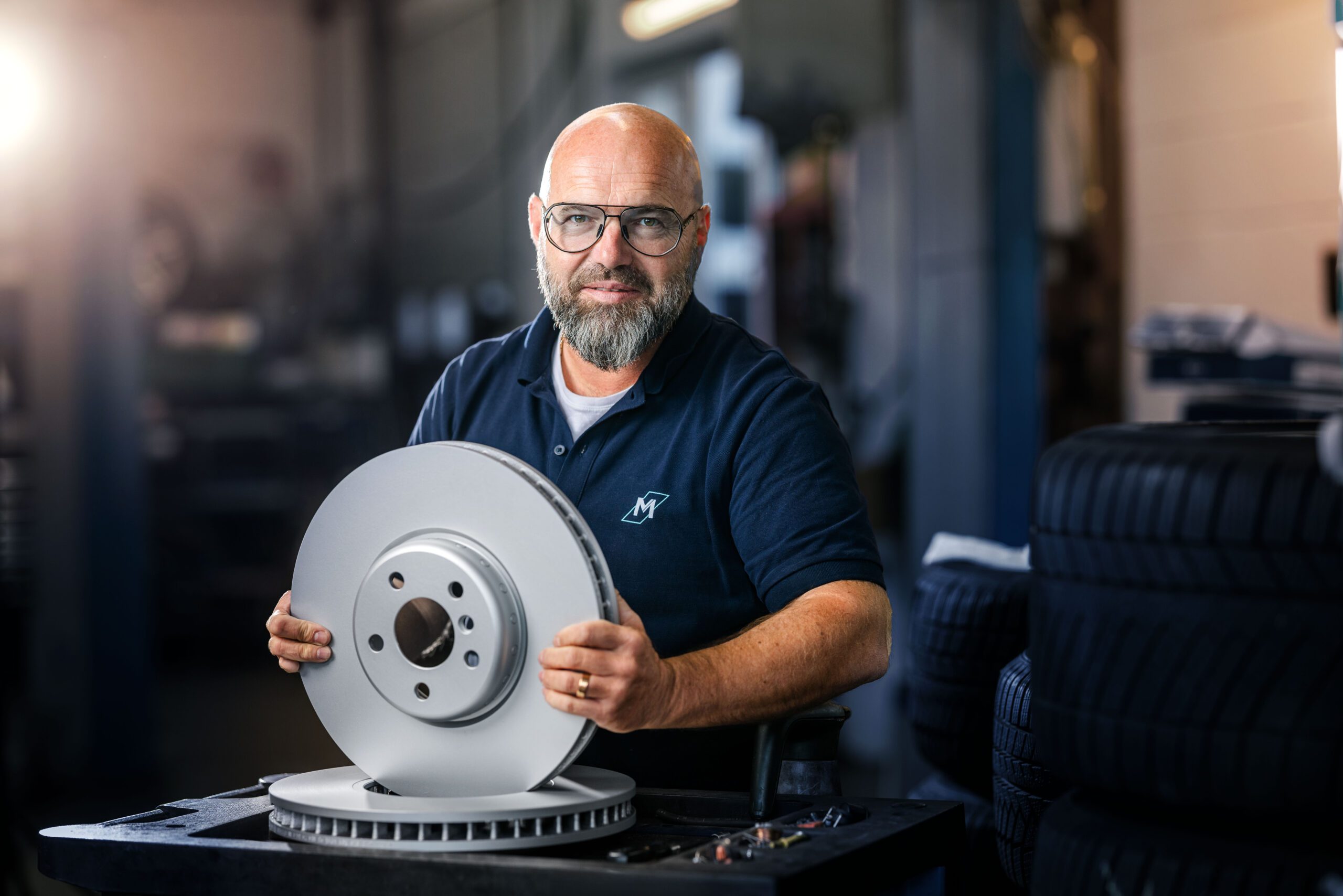
Modern braking systems face increasing demands, making material quality essential. High-carbon brake discs offer improved resistance to heat distortion and more consistent performance, while protective coatings help prevent corrosion and simplify installation. Brake pad performance is equally critical, with a stable friction coefficient required to ensure reliable, predictable braking across varying conditions.
With over 25 years in the industry, leading German parts manufacturer, MEYLE, offers a range of 3,000 brake pads and discs combined, covering 95 percent of the European car parc.
The brand’s development approach focuses on tailoring friction compounds to specific vehicle applications, balancing braking performance with noise comfort, wear resistance and reduced dust generation. Noise, in particular, remains a key concern for both workshops and customers, as high-frequency vibrations between pad and disc can result in brake squeal.
To counter this, MEYLE develops braking components designed to meet or exceed original equipment (OE) standards, providing workshops with reliable, right-first-time repair solutions.
The result is the MEYLE braking range, which is developed to deliver enhanced braking performance, long service life and improved driving comfort. Given the safety-critical role of braking systems, quality assurance is essential. All MEYLE brake discs and pads are manufactured in accordance with ECE R90 quality standards, ensuring compliance with European safety regulations – even exceeding these standards within the scope of legal approval to offer workshops the ultimate in peace of mind.
Components also undergo extensive validation, including durability testing, real-world braking simulations and independent assessments. Testing has demonstrated strong performance in friction stability, wear resistance and noise behaviour, highlighting the importance of material quality and precision engineering.
MEYLE brake pads incorporate a number of features designed to control vibration and reduce noise. These include vehicle-specific shims that act as vibration dampers, chamfers that optimise the transition between pad and disc during initial contact and slots that help dissipate heat and brake dust, while preventing cracking under thermal expansion. A vibration-decoupling adhesive layer between the shim and carrier plate further enhances damping characteristics, contributing to quieter operation without compromising braking performance.
Even the most advanced braking components rely on correct installation to perform as intended. Clean – dust and debris free – mounting surfaces, correct torque application, proper handling and component prep, plus bedding-in and replacing pads and discs in pairs are all essential to prevent issues such as runout or imbalance.
Precision manufacturing plays a key role in supporting this too. MEYLE brake discs are produced to tight tolerances to minimise deviations in runout, helping to ensure smooth operation from the outset. Pre-coated discs and included fittings further support efficient installation, reducing preparation time and lowering the risk of installation-related faults.
With pothole-related damage increasing and road conditions continuing to deteriorate, spring servicing provides a valuable opportunity for workshops and garages to identify brake system issues early. Many drivers remain unaware of the impact winter has had on their vehicle, particularly on components that are not immediately visible.
By carrying out thorough inspections and fitting high-quality replacement components, workshops can help improve vehicle safety, reduce the likelihood of repeat repairs – and high costs – and strengthen customer confidence.
* https://www.bbc.co.uk/news/articles/cm2rm8evv7eo
** https://www.rac.co.uk/drive/advice/driving-advice/rac-pothole-index-statistics-data-and-projections/





 Back to all