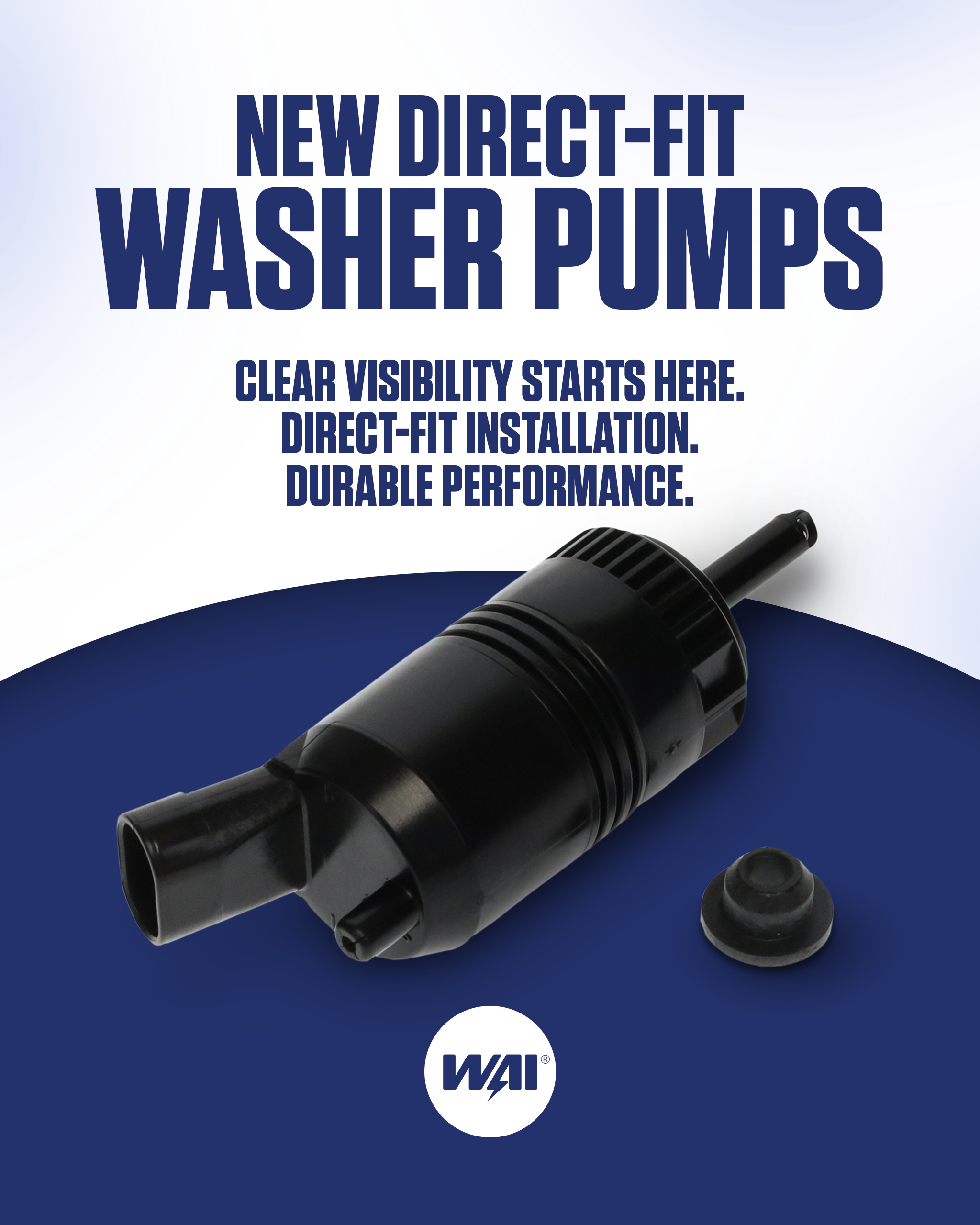
WAI Europe has added a new range of washer pumps to its extensive portfolio. To support this launch, the leading rotating electrics supplier has provided technicians with valuable insight into diagnostics and replacement.
WAI’s washer pumps are designed and manufactured to meet or exceed OE flow rates and connector styles. Each part number can be verified through its year, make, model, reservoir type and outlet configuration.
Some of the most common symptoms of a faulty washer pump include no spray from washer nozzles, a weak or inconsistent fluid stream or no noise coming from the pump motor when activated.
A lack of sprayed fluid when used could be attributed to low washer fluid level, highlighting the importance of confirming the reservoir has adequate fluid before replacing the component – especially in colder weather where ice can cause blockages.
Other obstructions may include clogged nozzles, hoses that have either been kinked or disconnected, or blockages in reservoir filter screens. Ensuring all passages are clear beforehand may help resolve the issue before changing the pump.
Electrical power and ground may also be at fault. WAI has encouraged technicians to check the battery voltage at the pump connector using a digital volt-ohm meter (DVOM), which can also check for good ground continuity. If power or ground is absent. Any potential breaks, corrosion or loose connectors should be checked when inspecting wiring.
If the pump doesn’t run despite positive voltage and ground results, a light tap on the pump may start the pump temporarily. Directly applying ground and power using a fused jumper harness may also work. Failing both methods, a washer pump replacement will be required.
When replacing washer pumps, it’s imperative to include new grommets and seals with every service, as worn components can cause air and fluid leaks. Any sediment and debris should also be identified and removed before installation.
Testing is a key part of washer pump replacement. A strong and even spray pattern should be identified as part of the final checks.
More information on WAI’s latest parts can be found here.





 Back to all